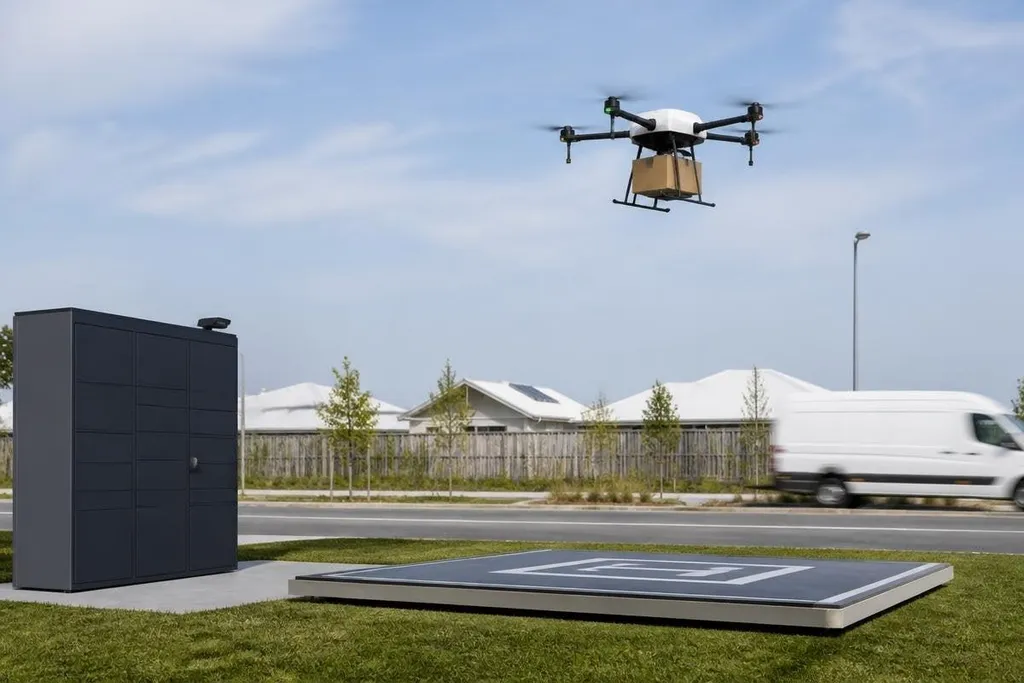
A delivery drone can skip road traffic and fly from a local depot to a drop point. That changes the last mile only when the parcel, route, airspace, and landing site all fit the aircraft.
Quick read
- Small parcels suit drones better than heavy or awkward loads.
- Local depots matter because short flights leave more battery for safety and return trips.
- Human checks, weather limits, and airspace rules still shape the service.
Where drones can help
The last mile is the part of delivery that runs from a nearby depot to the customer. It often involves many short stops, which can make a road vehicle spend more time slowing, parking, and starting again than moving between areas.
A drone replaces that road leg with a direct flight. Its flight computer follows a planned route, while cameras, GPS, and other sensors help it hold position and avoid obstacles. The aircraft can carry a parcel to a marked landing spot or lower it on a line when the ground is uneven.
That design suits items with a low weight and a clear delivery point. Medicine, small food orders, and household parts could fit this pattern, but a large box or a parcel that needs a signature creates harder problems.
The aircraft must lift the load, keep enough battery for the return trip, and leave room for a safe response if the route changes.
The depot matters just as much as the drone. A local launch site shortens the flight, which gives the operator more room for weather, battery use, and a second attempt. Flights from a distant warehouse lose that benefit before they leave the ground.
The systems behind the flight
A useful delivery service needs more than an aircraft. Software must assign orders, plan routes, check battery levels, and record the handoff. The depot also needs a way to load parcels, inspect the drone, and take it out of service when a fault appears.
The handoff is a design problem of its own. A customer may live beside a road, but the safest drop point could be a yard, a rooftop pad, or a fixed locker. Trees, power lines, balconies, and people can turn a clear map into a poor landing area.
A line-release system reduces the need for the aircraft to touch down, but it adds its own checks. The parcel must reach the ground without hitting a person, a car, or a wall. The drone then needs enough space to climb away without striking the release line or nearby objects.
A delivery-drone claim needs the aircraft, route, release method, test date, and recovery plan behind it. Delivery drone reporting fromRobot24.com can put those details beside the flight result before the next section looks at where the plan breaks.
Where the plan breaks
Weather is a direct operating limit. Wind changes the energy needed to hold a route, rain can affect sensors and electronics, and poor visibility makes a handoff harder to verify. An operator may need to delay a flight, change its route, or send a road vehicle instead.
Airspace rules add another layer. Delivery drones may need approval for certain flights, limits on where they can travel, and a human operator who can respond when the onboard system cannot make a safe choice. Those controls add staff time and may limit the number of flights one person can supervise.
Noise and privacy can also shape local acceptance. A drone flying over homes carries a camera and makes a sound that people may notice. A delivery plan that works on a map can still fail if residents reject the route or if the drop point cannot protect the parcel.
The business case has a simple test: does the drone complete enough deliveries per flight to cover the aircraft, depot, staff, repairs, and failed attempts? If each order needs a manual check or a road backup, the savings from a short flight may disappear.
A buying and planning checklist
Before a carrier or retailer starts a drone trial, check these points:
- Define the parcel limit in weight, size, and shape before choosing an aircraft.
- Map launch sites and drop points, then inspect trees, cables, roofs, roads, and nearby people.
- Set a battery rule that leaves room for a return flight and a safe landing.
- Record weather limits and decide who can pause flights.
- Test the handoff with an empty area, a real parcel, and a clear customer alert.
- Price the backup road delivery instead of treating it as a rare exception.
What happens next
The first useful services will probably stay on short, repeatable routes with known drop points. That gives operators a narrow job to measure: delivery time, failed handoffs, battery use, customer response, and the cost of sending a backup vehicle.
I'd back delivery drones for small parcels between local sites, but I'd skip any plan that treats the aircraft as a replacement for every delivery van. The next proof is not a smoother video; it is a route that keeps working through ordinary weather, missed handoffs, and the full cost of the backup plan.